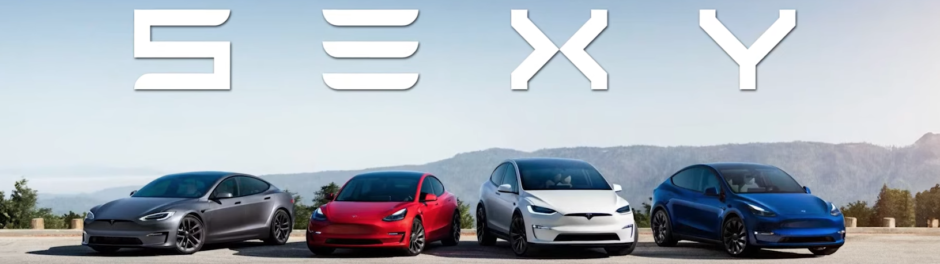
Check out America’s Electric Honeymoon Is Over. EV Owners Must Work Out Where to Go Next from The Wall Street Journal, Aug. 8, 2026. This article by Ellie Davis is spot on with what’s going on in the automotive industry right now, and though I agree with her analysis, I DON’T LIKE IT!
I have written previously about the evolution of powertrain preferences in the US, stating that ICE (internal combustion engine) cars are obsolete on US roads. ICE trucks, different story. If you need a big truck to carry or tow heavy loads, hybrid and EV powertrains don’t make any sense. But for cars, hybrid powertrains are becoming really good and should be the choice for ‘most’ Americans. EV is still an ‘early adopter’ situation, though for those that have actually made the transition (like me – my Tesla Model 3 is the absolute best car in the world for so many reasons) there’s no looking back. There’s no way I would ever revert to ICE, or even a hybrid (though maybe a plug-in hybrid could convince me otherwise) for my daily driver.
Now back to Ellie’s article and some key points:
- The Biden-era $7,500 EV tax credit and subsidized lease deals and discounts
In 2025, I got a fantastic lease deal I couldn’t pass up on a Tesla Model 3 RWD long range. Great car, great value, and a pretty good purchase price at the end of the lease. All good! So what changed?
- The tax credit is gone, automakers are less motivated to promote EVs, several EV models have been removed from the market, and prices are up. And here’s how those in the market for a new car are responding:
Looking at the last 4 years in California, buyers bought more new EVs than hybrids. But in the first half of 2026, 22.1% of new cars sold were hybrids, compared with 15.9% EVs (California New Dealers Association). And this is California, land of high fuel prices and ongoing incentives for first-time EV buyers.
I agree hybrids are getting better, but still a hybrid powertrain is extremely complex with many moving parts and maintenance requirements. Fact: A Tesla drivetrain has 17 to 20 moving parts, which is much lower than the 2,000+ moving parts found in a ‘standard gas car engine and transmission.’ My point is, hybrids require A LOT MORE maintenance than an EV, and there’s a cost for that. Many people migrating from ICE to hybrid expect maintenance schedules to be similar, and they are. But maintenance on an EV is radically different (tires – that’s pretty much it). And fuel cost savings can been significant!
At the end of Ellie’s article she quotes Ivan Drury, an Edmunds automotive analyst, who said that ‘consumers who struck while the iron was hot—leased EVs when prices were at a low—got a once-in-a-lifetime deal.’ Yup, that was me. That’s not happening again. And you can quote me on that!
Question: When my Tesla lease is up, do you think I’ll choose to hang on to my 2025 Tesla Model 3 (love this car), or spring for a new Slate pickup (very practical and just plain cool)? I just don’t know.

or

?